
From my years of working with pets, I’ve seen how Cushing’s disease—also known as canine Cushing’s syndrome or hyperadrenocorticism—can quietly affect middle-aged dogs and senior dogs. This endocrine disorder happens when the pituitary gland in the brain or the adrenal glands begin producing cortisol in excess. The cortisol hormone, a steroid hormone, normally helps dogs manage stress and regulate many body functions. However, when this system’s feedback mechanism becomes faulty, it triggers continuous adrenocorticotropic hormone (ACTH) release into the bloodstream, which overstimulates the adrenal glands. This leads to additional hormones building up and straining the kidneys, creating serious imbalances inside the body.
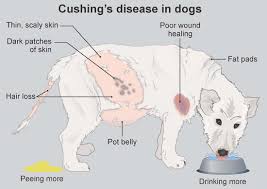
Over time, I’ve noticed that symptoms like increased thirst, excessive panting, and hair loss become early warning signs. If untreated, this hormonal chaos can lower a dog’s quality of life drastically. Because of the adrenal glands’ key role in hormone control, even slight irregularities can disrupt the entire system. In my experience, dogs suffering from this disorder often show behavioral changes that reflect the deep internal stress caused by excess cortisol. Recognizing these subtle shifts early allows for effective Cushing’s disease management before it progresses further.
Treating Cushing’s Disease in Dogs
When my nine-year-old dog started drinking and eating more than usual, losing hair, and developing a pot-bellied appearance, I knew something was wrong. After visiting the vet, several diagnostic tests confirmed Cushing’s disease, also called Cushing’s syndrome or hyperadrenocorticism. This condition occurs when the adrenals release too much cortisol, a hormone that helps the body manage stress but can harm the kidneys, affect body weight, and weaken the immune system when out of balance. The veterinarian prescribed medication approved by the FDA and guided by the Center for Veterinary Medicine, designed to control excess natural steroids in the glands. With ongoing care, dogs become less vulnerable to infections and other diseases, helping restore balance and comfort to their lives.
What are the treatment options?
In my years of working with dogs affected by Cushing’s disease, I’ve seen how choosing the right treatment depends on the cause—whether it’s pituitary-induced or an adrenal tumor. For dogs with a pituitary tumor, medications like trilostane (brand name Vetoryl) are often the most effective and recommended options. This drug works by blocking an enzyme involved in hormone synthesis, helping keep cortisol at healthy levels. Another option, mitotane (brand name Lysodren), targets adrenal tissue, but because it can be destructive at higher doses, it requires careful monitoring. In some patients, other medications such as selegiline hydrochloride (Anipryl) or ketoconazole (Nizoral) may help, especially when Cushing’s disease is complicated or secondary to other issues.
For dogs with an adrenal tumor, surgery is usually the preferred approach. Though it can be major abdominal surgery, many cases are successful when the tumor removed is not malignant. In certain instances, radiation therapy offered at referral centers can also be used to target pituitary tumors, especially when medication alone doesn’t yield results. Some patients with iatrogenic Cushing’s disease—caused by long-term steroid use—require gradual discontinuation of the drug under a veterinarian’s supervision to avoid complications or recurrence. With the right balance of care, the disease can be controlled and managed, allowing dogs to return to a near normal health and lead fulfilling lives.
Treating Cushing’s Disease
From my experience working with veterinarians, I’ve learned that how we treat Cushing’s disease depends on whether it’s adrenal-dependent or pituitary-dependent. When an adrenal tumor causes the disease, surgery can sometimes be the best option, especially if the tumor hasn’t spread. However, because of the complexity and risks involved, not all dogs are suitable for surgery. In such cases, medication becomes the main form of treatment. The most common approach is using Vetoryl, a brand name for trilostane, an FDA-approved prescription drug that reduces cortisol production in the adrenal glands. Other medications like Lysodren (mitotane)—a chemotherapy drug that targets adrenal gland layers—or Anipryl (selegiline), a human drug used extra-label or off-label, may also be prescribed. These treatments have been carefully studied but can behave unpredictably depending on the dog’s health and the form of Cushing’s disease.
In my experience, this is truly a balancing act. The veterinarian and owner must work together to ensure the lifelong condition is managed properly. Dogs must be monitored closely with blood tests, blood work, and veterinary checkups every few months to assess the response to treatment. The dose of medication may need to be adjusted periodically, depending on tolerance and test results. If side effects occur—such as reduced appetite, vomiting, lack of energy, diarrhea, weakness, bloody diarrhea, collapse, or a sodium/potassium imbalance—the veterinarian should be informed immediately. These signs may indicate destruction of the adrenal gland, which, if untreated, can lead to severe complications or even death.
In some cases, dogs with pituitary tumors that can’t be treated surgically require long-term medications and frequent monitoring to maintain balance. Dogs with kidney disease, liver disease, or heart disease, and pregnant females, must be treated cautiously since their tolerance to drugs differs. When giving medication, owners must follow instructions as directed and report problems to the veterinarian, FDA, or through the animal drug and device side effects reporting system for product problems. With careful care and regular checkups, many dogs live a good life, even while managing this condition.
Signs of Cushing’s Disease
From my own experience working with middle-aged dogs and older dogs, I’ve learned that Cushing’s disease often develops slowly, making it easy for owners to miss the early signs. The symptoms may begin subtly — a bit of increased thirst, increased urination, or even an increased appetite that seems harmless at first. Over time, dogs may show reduced activity and excessive panting, especially after light exercise or on warm days. As the condition progresses, I’ve seen many dogs develop thin skin or fragile skin, followed by noticeable hair loss and recurrent skin infections that just don’t heal easily. One of the most telling signs I’ve observed is the enlargement of the abdomen, often described as a pot-bellied appearance, caused by changes in muscle tone and fat distribution. These visible shifts in their bodies often serve as the first real warning to seek veterinary help before the disease worsens.
What are Symptoms of Cushing’s Disease in Dogs?
From my experience, Cushing’s disease can change a dog’s behavior in ways that are easy to miss at first. Because of high cortisol levels, affected dogs often eat more, drink more, and urinate in large amounts or more frequently than usual. Many owners notice their pets hovering around the dog bowl or dog feeder, finishing every meal and still searching for more dog food, while their water intake and drinking increase noticeably. Over time, symptoms like panting, lethargy, and gradual weight loss appear, along with a telltale potbelly appearance caused by muscle weakness. The skin may become thin, leading to hair loss, skin infections, and sometimes calcified skin or hardened tissue growth forming hard lumps. These visible and behavioral changes are key signs that your dog may be struggling with this condition.
What Causes Cushing’s Disease in Dogs?
Through years of working with dogs, I’ve learned that Cushing’s disease can arise from several different sources, each affecting the body’s hormone balance in unique ways. The most common cause is a pituitary gland adenoma, a benign tumor in the pituitary that produces too much ACTH, which overstimulates the adrenal glands to release excessive cortisol. In other cases, an adrenal gland tumor or adrenal gland mass, sometimes even a carcinoma, can trigger excess cortisol production directly. This overproduction of the steroid hormone can lead to serious symptoms that gradually appear over time.
There’s also a form called iatrogenic Cushing’s disease, which happens when medication such as corticosteroids or prednisone—often prescribed for an autoimmune disease or allergies—causes the same hormonal imbalance. Thankfully, this type can be reversible by discontinuing medication under the guidance of a veterinarian. I’ve seen certain breeds like Poodles, Yorkshire Terriers, and Dachshunds develop this medical condition more frequently, suggesting that genetics may play a role. Understanding these causes helps in tailoring the right treatment for every individual dog.
How Veterinarians Diagnose Cushing’s Disease in Dogs
When a dog shows symptoms that suggest Cushing’s disease, a veterinarian begins with a detailed physical exam and a review of the pet’s medications, since some drugs can influence hormone levels. From my experience, accurate diagnostic testing is essential to diagnose this condition correctly. The veterinarian often recommends specific tests such as the low-dose dexamethasone suppression test or the ACTH stimulation test. These help confirm how the adrenal glands are responding and whether the body is producing too much cortisol. By combining test results with clinical signs, the vet can make a confident diagnosis and guide the next steps in treatment.
Low-dose Dexamethasone Suppression Test
In my experience, the low-dose dexamethasone suppression test is one of the most preferred testing methods for diagnosing Cushing’s disease in dogs, as it’s reliable and often the least expensive option. During this procedure, a corticosteroid called dexamethasone is administered into a muscle or vein, and several blood samples are taken over time to check resting cortisol levels. These samples are usually collected after four hours and again after eight hours. In healthy dogs, cortisol levels become suppressed after the injection, but in dogs with Cushing’s disease, the cortisol increased or remains high. This pattern helps veterinarians confirm the diagnosis and decide on the best treatment approach.
ACTH Stimulation Test
In my practice, the ACTH stimulation test is one of the most reliable ways to confirm Cushing’s disease in canine patients. This test begins with taking a blood sample to measure resting cortisol levels. Then, a small amount of ACTH is administered into a muscle or directly into the blood. After a short period, another sample is drawn to compare cortisol levels. In healthy dogs, the change in cortisol is minimal, but in dogs with Cushing’s disease, the cortisol increased significantly. This helps determine whether the condition is pituitary-dependent or adrenal-dependent, both of which require different management strategies.
Sometimes, additional tests like the low-dose dexamethasone suppression test or high-dose dexamethasone suppression test, which uses a higher dose of dexamethasone, are performed to confirm suppression patterns. For deeper insights, imaging techniques such as abdominal ultrasound, CT, or MRI may be used to identify pituitary or adrenal tumors. Alongside these tests, blood work, urine testing, and general evaluations of overall health—including high cholesterol, triglycerides, white blood cells, and dilute urine—are checked to complete an accurate diagnosis. These combined findings allow veterinarians to tailor the best treatment plan for each dog’s unique condition.
Treatment for Cushing’s Disease in Dogs
In my experience, Cushing’s disease in dogs is usually managed, not cured, but with the right treatment, dogs can live comfortably for years. The most common medications used are trilostane, also known as Vetoryl, and mitotane, known as Lysodren. Trilostane is a steroid analogue that blocks the enzyme responsible for cortisol production, effectively decreasing hormone level in the body. This is the preferred treatment for most pituitary-dependent cases because it’s safer and easier to adjust. On the other hand, mitotane is a chemotherapeutic medication that destroys parts of the adrenal gland to control cortisol levels, which is often used in adrenal-dependent Cushing’s cases.
In some dogs with an adrenal gland tumor, surgery may be an option, though it depends on the dog’s general health and the availability of skilled surgical care. For pituitary-dependent dogs, radiation therapy can help reduce tumor size and prevent complications. Alongside medical therapy, managing high cholesterol through a low-fat diet is highly recommended. Many of my patients do well on diets like Royal Canin Gastrointestinal Adult Low Fat Diet or Hill’s Prescription Diet i/d, which support digestion while minimizing fat intake. With the right approach, treatment can balance hormones and improve overall quality of life.
Management of Cushing’s Disease in Dogs
While Cushing’s disease in dogs isn’t preventable once it develops, its effects can be well-managed with consistent care. In many cases, the condition is linked to pituitary or adrenal gland tumors, while iatrogenic Cushing’s disease can be prevented by carefully dosing and monitoring steroid medications. Once diagnosed, continued monitoring through blood work and ACTH stimulation tests is essential for the remainder of life to ensure the medication dosage stays appropriate and symptoms remain controlled. Regular vet appointments help track any change in symptoms or medication response. If your dog shows excessive thirst or clinical signs of the disease returning, it’s crucial to contact your vet immediately for guidance.
Life Expectancy for Dogs With Cushing’s Disease
From my years of observing cases, I’ve seen that a dog’s lifespan with Cushing’s disease largely depends on how early the diagnosis is made and the treatment plan that’s chosen. In most cases, the expected lifespan after diagnosis ranges from one to five years, but many dogs live comfortably even longer when their condition is well-managed. Proper medication, diet, and regular veterinary checkups can make a big difference in maintaining a good quality of life throughout this time.
What is an ideal diet for a dog with Cushing’s disease?
From my experience helping pet owners manage this condition, I’ve found that dogs with Cushing’s disease generally have high cholesterol and triglyceride content in their blood and benefit from a low-fat diet. Choosing foods that are lean, rich in high-quality protein, and full of antioxidants can support liver health and help maintain stable energy levels. Many vets also suggest avoiding excessive treats or fatty table scraps to keep the metabolism balanced and prevent further complications.
Are there natural remedies for dogs with Cushing’s disease?
No. Dogs require oral medication or surgery to treat Cushing’s disease. There are no natural remedies that are an effective treatment.
How often should my dog have their adrenals tested for Cushing’s management?
In my experience working with dogs being treated for Cushing’s disease, regular monitoring is key to keeping them healthy. Most dogs on oral medications like trilostane should have their adrenal function checked approximately every three months, though the intervals can vary depending on each dog’s needs. This schedule usually continues for the rest of life, ensuring the medication dose remains safe and effective. If additional medical conditions, such as diabetes, are present, testing may need to be done more often to properly manage the condition and maintain balance.
How long can a dog live with Cushing’s disease?
From my experience caring for pets, the expected lifespan of a dog diagnosed with Cushing’s disease usually ranges between one to five years, depending on how well the selected treatment works and how the dog responds to it. Some dogs live comfortably for years with the right medication, diet, and regular checkups, while others may show slower improvement. Every case is unique, so maintaining close communication with your vet helps ensure your dog enjoys the best possible quality of life during treatment.
What are the early signs for Cushing’s syndrome in dogs?
The early signs of Cushing’s in dogs often appear subtle at first but gradually become more noticeable as cortisol increases in the body. From my experience with pet owners, I’ve seen that small changes in a dog’s behavior, like eating more, drinking more, and urinating in large amounts or more frequently, are usually the first hints. Some dogs also show increased panting, mild weight loss, and lethargy, which owners might confuse with aging. Recognizing these symptoms early can make treatment more effective and improve a dog’s overall comfort.
Can Cushing’s disease in dogs be cured?
No, Cushing’s disease in dogs cannot be cured, but with proper care, medications and monitoring may help to manage the effects and symptoms effectively. From my experience working with affected pets, I’ve seen that consistent follow-up and early detection play a major role in keeping dogs stable and comfortable. Regular vet visits ensure medication doses remain safe and effective, helping many dogs live happier, more active lives despite their diagnosis.
What do I need to know if my dog’s disease is being managed with medication?
When dogs are successfully treated for Cushing’s disease, it’s important for owners to work closely with their veterinarian to follow a clear treatment plan. This usually involves lifelong treatment where regular administration of medication is necessary to keep the pet’s condition stable. The guidelines and treatments must be consistent, and the drug dosage should be carefully monitored through blood tests and clinical signs. Routine follow-up visits help ensure the proper dosage is maintained while preventing side effects or complications, allowing the dog to live comfortably under professional supervision.
What is the prognosis?
When it comes to Cushing’s disease, the prognosis depends on the cause and how the dog responds to medical treatment. In many patients, the condition can be controlled even if a complete cure isn’t possible. If a tumor is small and located in the brain or adrenal gland, pet owners may see good improvement, especially when treated early. However, malignant adrenal tumors often have a guarded or poor outlook, while benign adrenal tumors can be treated with surgery, which in some cases may even be curative for the affected dog.
When to contact your vet
Contact your vet if you think your dog has symptoms of Cushing’s, even if they seem otherwise well. It will help your vet if you take a urine sample and a note of how much your dog drinks in a 24-hour period. Watch our videos below for guidance on how to collect a urine sample and measure how much your dog is drinking.
What is the best thing to do for a dog with Cushing’s disease?
The best treatment plan for a dog with Cushing’s disease includes using veterinary-prescribed medications to help control hormone levels and reduce symptoms. Along with medicine, dietary management plays a key role—feeding a balanced, low-fat, and high-quality protein dog food that supports overall health. From my experience, regular monitoring of symptoms and hydration is essential, as dogs respond differently to treatment. It’s also important to avoid stress, maintain a consistent routine, and schedule vet check-ups to adjust the plan as needed for the best outcome.
What is the life expectancy of a dog with Cushing’s disease?
A dog diagnosed with Cushing’s disease can often live a happy life for approximately two years to three years, depending on how well the disease is managed. Some dogs even survive beyond the ultimate age expected when they are closely monitored by their vet and kept comfortable through regular care. The survival rate can vary, but with consistent medication, proper diet, and attention to symptoms, many dogs maintain a good quality of life during treatment and remain loving companions for years to come.
What are the final stages of Cushing’s disease in dogs?
From my experience, the final stages of Cushing’s disease in dogs often bring increased weakness, worsening symptoms, and a noticeable decline in the quality of life. During this stage, it’s important for pet owners to have an understanding of what to expect so they can make informed decisions about compassionate care. Dogs may become less active, lose interest in food, or struggle with mobility, signaling that their bodies are tired. As someone who has seen many families go through this, I believe love, patience, and gentle support make a world of difference for both the pet and the owner.
Is it worth treating Cushing’s disease in dogs?
In my experience, many dogs with Cushing’s disease can still live a longer, comfortable life when given the right treatment. Without care, these pets often gain weight, lose hair, and urinate more often in the house, which can be stressful for both the dog and the owner. Although some owners may fear that managing the disease is too hard or costly, it’s important to remember that Cushing’s disease is treatable, and the goal of treatment is to improve daily comfort rather than to rush into euthanasia. With patience and proper veterinary guidance, many pets return to being happy companions for their owners.
What foods should dogs with Cushing’s avoid?
From my experience caring for pets with Cushing’s disease, certain foods should be strictly avoided to help manage their condition. Dogs with this illness need balanced nutrition, but high-carb, processed, fatty, and salty treats like jerky, chips, and deli meats can worsen their symptoms. These items often add unnecessary calories and can put extra strain on the kidneys and heart, making it harder for the body to regulate hormones. Instead, I always recommend sticking to fresh, low-fat, and nutrient-dense meals that support steady energy and reduce stress on vital organs.
I got what you mean ,saved to bookmarks, very nice site.